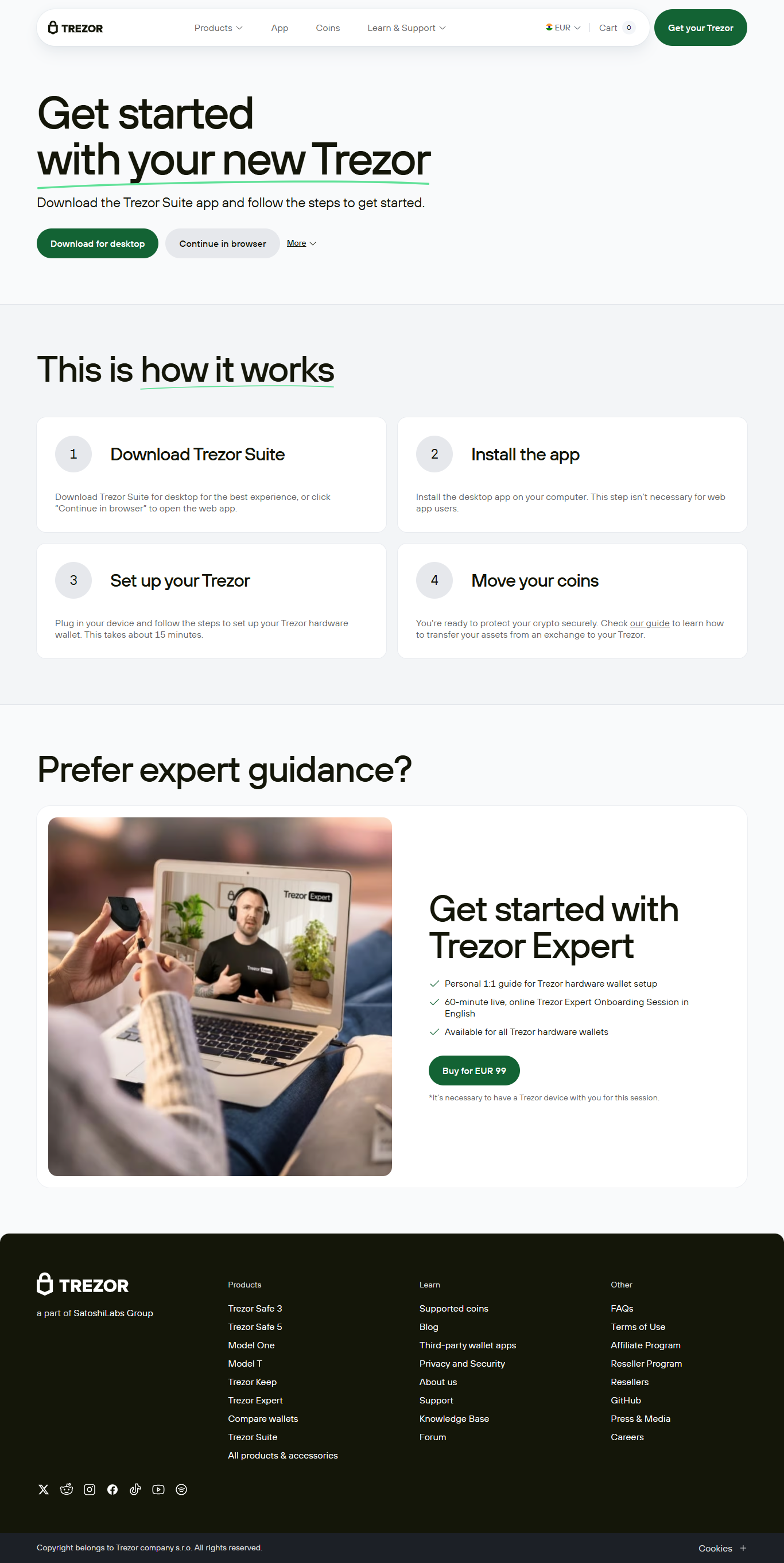
Trezor Login: Your Secure Gateway to Crypto Management
Learn how to safely access your Trezor wallet, manage your digital assets, and protect your crypto journey with advanced hardware security.
🔐 Understanding the Trezor Login System
Trezor login isn’t just about accessing an account—it’s about entering a fortress of digital security. Built by SatoshiLabs, Trezor hardware wallets provide a robust layer of protection against online threats. Whether you are new to crypto or a seasoned investor, logging into Trezor ensures your private keys remain offline, safe from phishing, malware, or data breaches.
Unlike web-based wallets that store your credentials online, Trezor wallets store sensitive data within the device. The Trezor login process combines PIN authentication and physical device confirmation, ensuring that no one but you can authorize a transaction.
📘 Quick Definition
Trezor Login refers to the secure process of connecting your Trezor hardware wallet to the Trezor Suite app or compatible platforms, allowing safe management of your cryptocurrencies through verified device interactions.
💼 Why Secure Login Matters in Crypto
In the digital world, convenience often clashes with security. Many crypto holders have lost funds by relying on software wallets or exchanges vulnerable to attacks. Trezor’s login mechanism prioritizes hardware-level protection, ensuring private keys never touch the internet. This model eliminates the single biggest point of failure in crypto—online exposure.
Through Trezor’s zero-knowledge approach, even the manufacturer cannot access your funds. Your recovery seed and device PIN are known only to you, offering unmatched autonomy and control.
🧭 Step-by-Step Guide: How to Log in to Trezor
- Connect Your Device: Plug your Trezor Model One or Model T into your computer using a USB cable.
- Access Trezor Suite: Open the Trezor Suite desktop or web app to initiate the login process.
- Confirm on Device: Review and confirm the connection request directly on your Trezor screen.
- Enter PIN: Use the hidden PIN matrix on-screen to input your PIN securely.
- Access Dashboard: Once confirmed, your wallet overview loads, showing assets, balances, and transaction history.
⚙️ Trezor Suite and Its Role in Login Security
Trezor Suite is the official app used for managing your crypto wallet. It acts as the communication bridge between your hardware device and the blockchain network. Every login through Trezor Suite ensures end-to-end encryption and device validation.
Within Suite, you can check your portfolio, send or receive coins, swap tokens, and update firmware—all under Trezor’s advanced protection model. It’s designed to give users both visibility and control, without compromising privacy.
💡 Pro Tip:
Always verify the web address before connecting your Trezor. Ensure it begins with https://suite.trezor.io. Fake sites often mimic this layout to steal credentials.
🧱 Behind the Scenes: The Technology Powering Trezor Login
Trezor wallets utilize Secure Element technology and open-source cryptography to provide full transparency. Every transaction requires on-device verification, meaning no action can proceed without physical interaction from the owner.
Here’s what happens during login:
- The device generates a secure connection using U2F (Universal 2nd Factor) standards.
- PIN entry is randomized on-screen to prevent keylogging.
- Encrypted communication ensures no data is leaked during authentication.
This model eliminates phishing risks, making Trezor login one of the most resilient systems in the crypto ecosystem.
📊 Trezor vs Other Wallet Logins
| Feature | Trezor | Software Wallet | Exchange Account |
|---|---|---|---|
| Private Key Storage | Offline in Hardware | Online/Cloud | Centralized Server |
| Login Authentication | Device + PIN + Confirmation | Password Only | Email + 2FA |
| Phishing Protection | High | Medium | Low |
| Control Over Funds | Full Ownership | Shared | Custodial |
🧩 Troubleshooting Common Login Issues
Sometimes, users face minor hurdles during Trezor login. Here’s how to fix them:
- Device Not Recognized: Try reconnecting or switching USB ports.
- Incorrect PIN: Remember that the PIN layout changes with each login for security.
- Firmware Outdated: Use Trezor Suite to update firmware securely.
- Browser Incompatibility: Trezor Suite Desktop avoids most browser-related issues.
❓ Frequently Asked Questions (FAQ)
Q1: Can I log into Trezor without the device?
No, Trezor requires physical confirmation for all logins. This prevents remote access and hacking attempts.
Q2: What if I lose my Trezor?
You can recover your wallet on a new Trezor using your 12–24 word recovery seed. Keep this seed offline and secure.
Q3: Is Trezor login anonymous?
Yes. Trezor does not collect user data, IP addresses, or account details. You remain in full control.
Q4: Do I need internet access to log in?
You only need internet access to sync blockchain data. The authentication itself is local and secure.
🚀 Final Thoughts: Empower Your Crypto with Secure Trezor Login
The Trezor login experience is more than a gateway—it’s your personal security vault. By using hardware-based authentication, encrypted communication, and physical verification, Trezor ensures your digital wealth remains untouchable. In a world where online attacks evolve daily, owning a Trezor device and understanding its login process is your best defense.
Stay Secure. Stay Decentralized. Stay in Control.